Groups
The Groups section is for accounts with many screens, such as a business with displays across several branches. As the number of screens grows, selecting the same ones for every operation gets difficult. Put screens of the same category in a group, and you can run operations on all of them at once and give each team member access to just the groups they handle.
Overview
In the cloud, you can manage groups in the following ways:
What opens in the Groups section
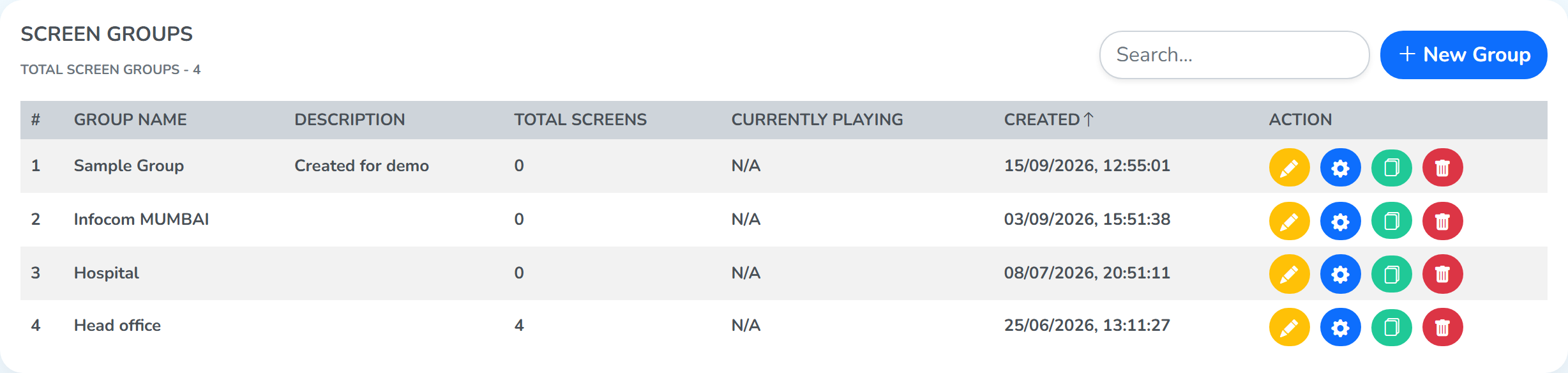
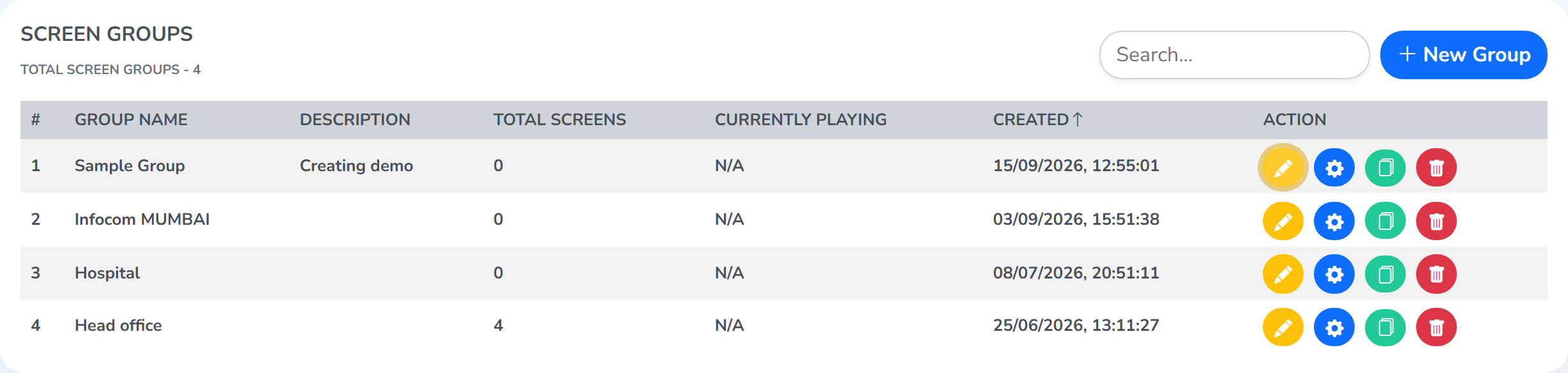
Click the Groups tab in the left sidebar. Screen Groups lists every group on the account, with the total number of groups under the heading.
TOTAL SCREENScarries how many screens the group holds, counting the screens in its subgroups too.CURRENTLY PLAYINGcarries what the group is playing.CREATEDcarries the date and time the group was made.
Alongside them are the group’s number, name and description, with four icons in ACTION at the end of the row: the yellow pencil edits the name and description, the blue gear opens the group’s own page, called the group settings page, the green copy clones it, and the red bin deletes it.
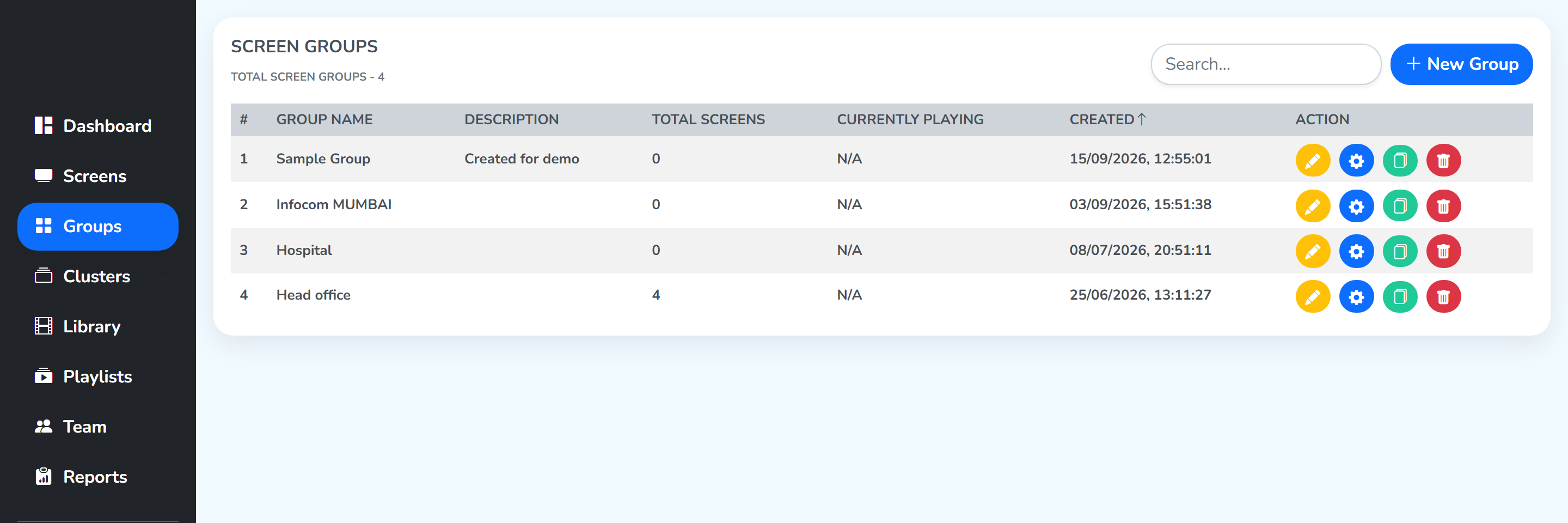 Four actions on every row
Find a group
Type in the Search box. The list narrows to the groups whose name matches, as you type.
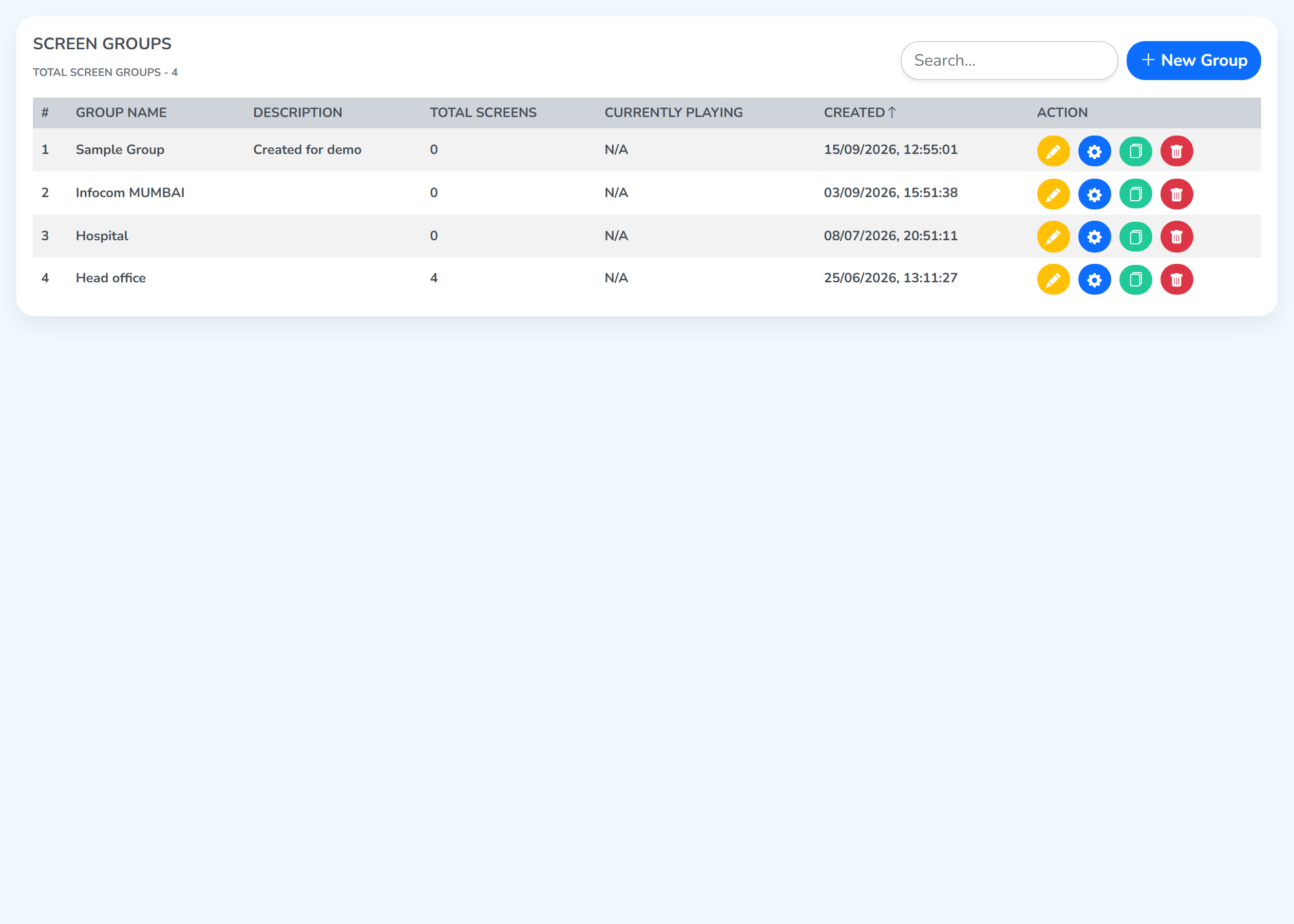 Search by group name
Sort groups by created date
The list opens with the newest group at the top.
Click the arrow beside CREATED. The oldest group moves to the top, and a second click brings the newest back to the top.
Click the arrow to reverse the orderCreate a new group
Step 1: Select the + New Group button in the top right.
Step 2: Enter the Group Name, and a Description of up to 50 characters if you want one.
Step 3: Click Create Group.
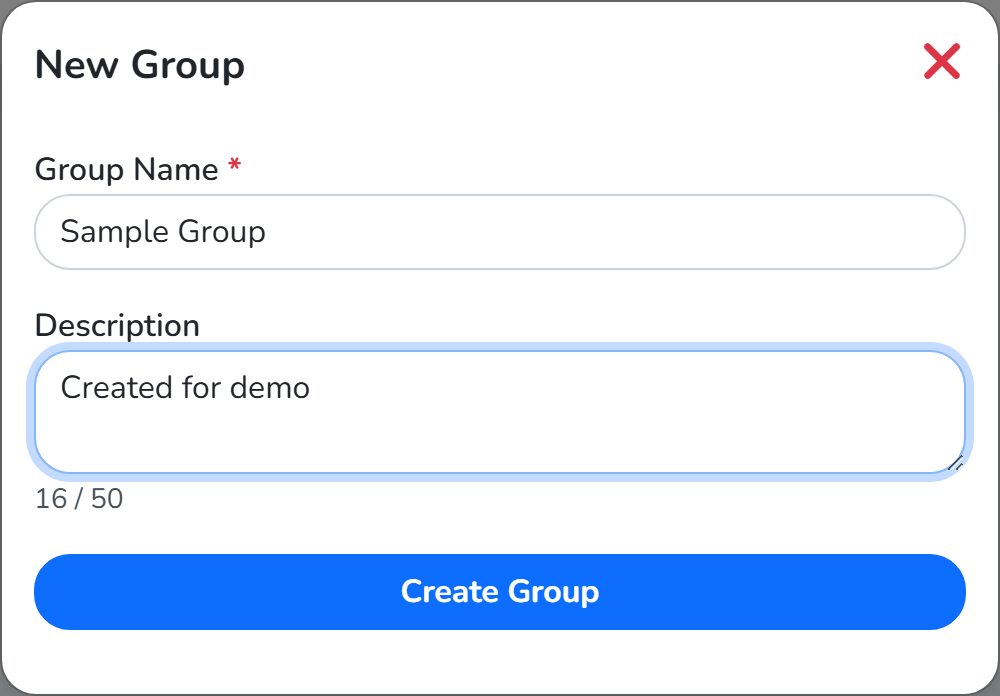 What the group is calledUp to 50 charactersCreates it
The group joins the list straight away. Its screens are added from its own page.
Subgroups
A group can hold subgroups, and each subgroup can hold subgroups of its own, so one group can carry a whole tree of levels. A common shape follows places: a country group holds state subgroups, each state holds cities, and each city holds branches. Every level keeps its own screens, and the group at the top counts all of them together.
Inside a subgroup
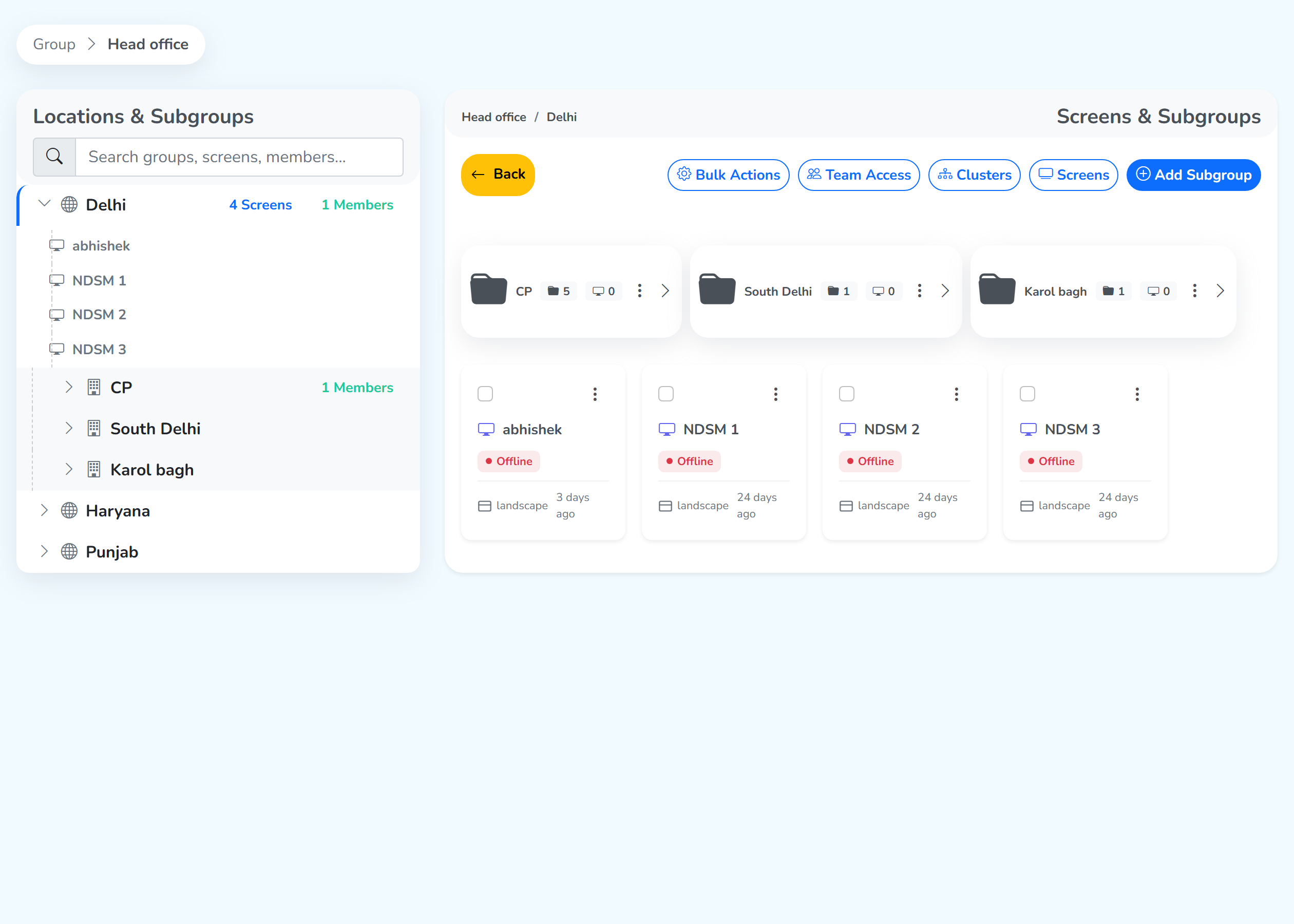
Opening a subgroup moves you a level down, and the right panel then belongs to that level alone:
- The path at the top names each level from the group down to this one, so you always know where you are.
Backtakes you one level up.- The cards below hold the subgroups and the screens that sit at this level.
 Each level down to this oneOne level upIts screens and subgroups
Rearrange the tree
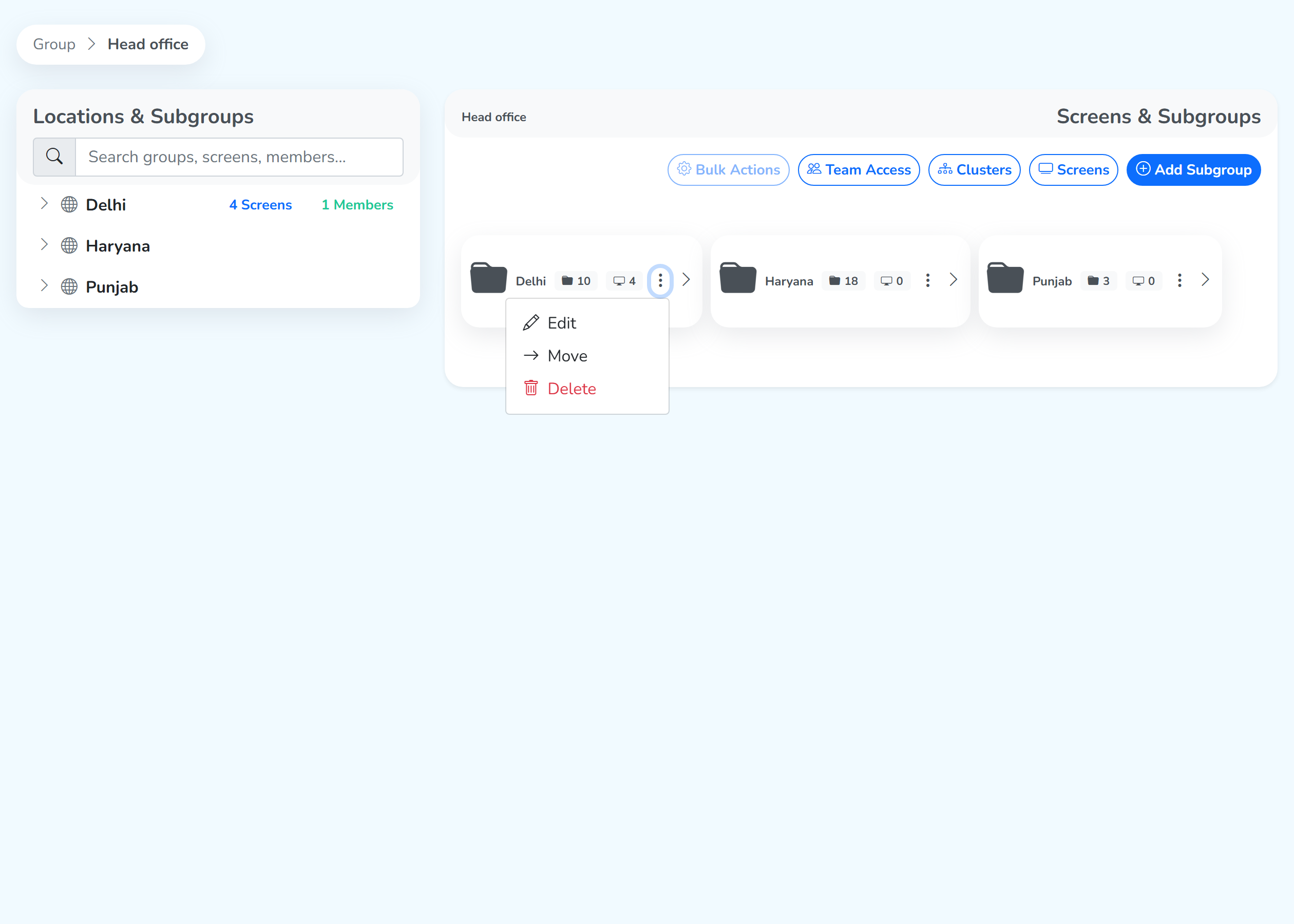
⋮ on a subgroup card opens Edit, Move and Delete. Edit changes its name. Move opens a window where you pick the destination, either the root group or another subgroup, and everything inside the subgroup travels along. Delete removes it.
Edit a group
Step 1: Click the yellow ✏️ Edit button next to the group you want to modify.
Step 2: Update the Name or Description as needed.
Step 3: Click the Update button to save your changes.
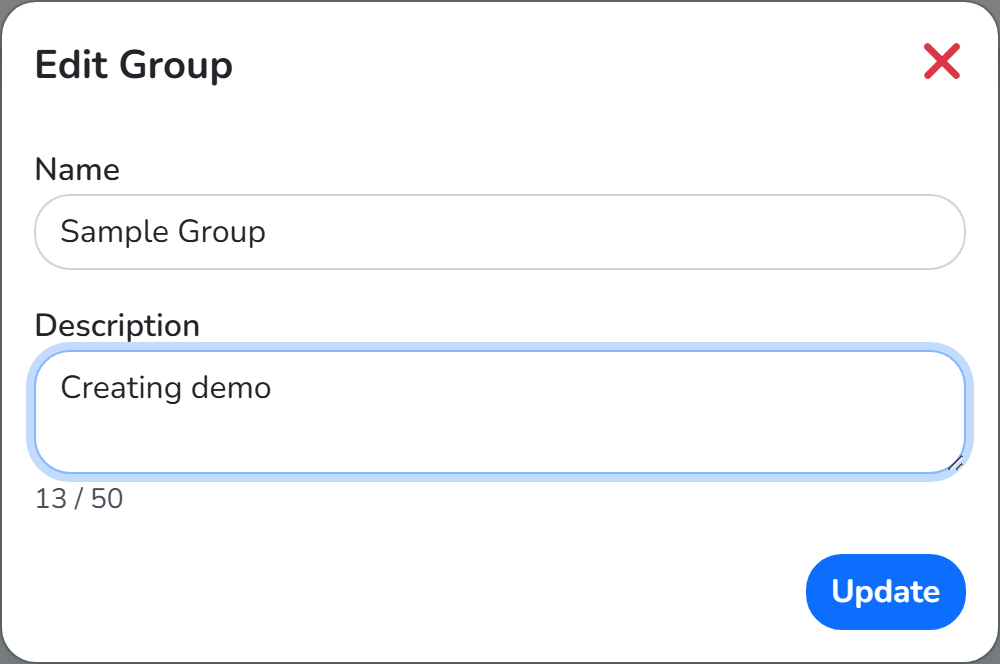 The group's nameIts descriptionSaves the change
The list shows the updated description straight away.
The next icon in the row is the blue Settings gear, which opens the group settings page. That page is covered in the Group Settings document.
Clone a group
Step 1: Click the green Clone button next to the group you want to copy.
Step 2: Under Select items to copy, tick what the copy takes along: Screens, Team Access and Clusters, or Select All for all three.
Step 3: Click Clone Group.
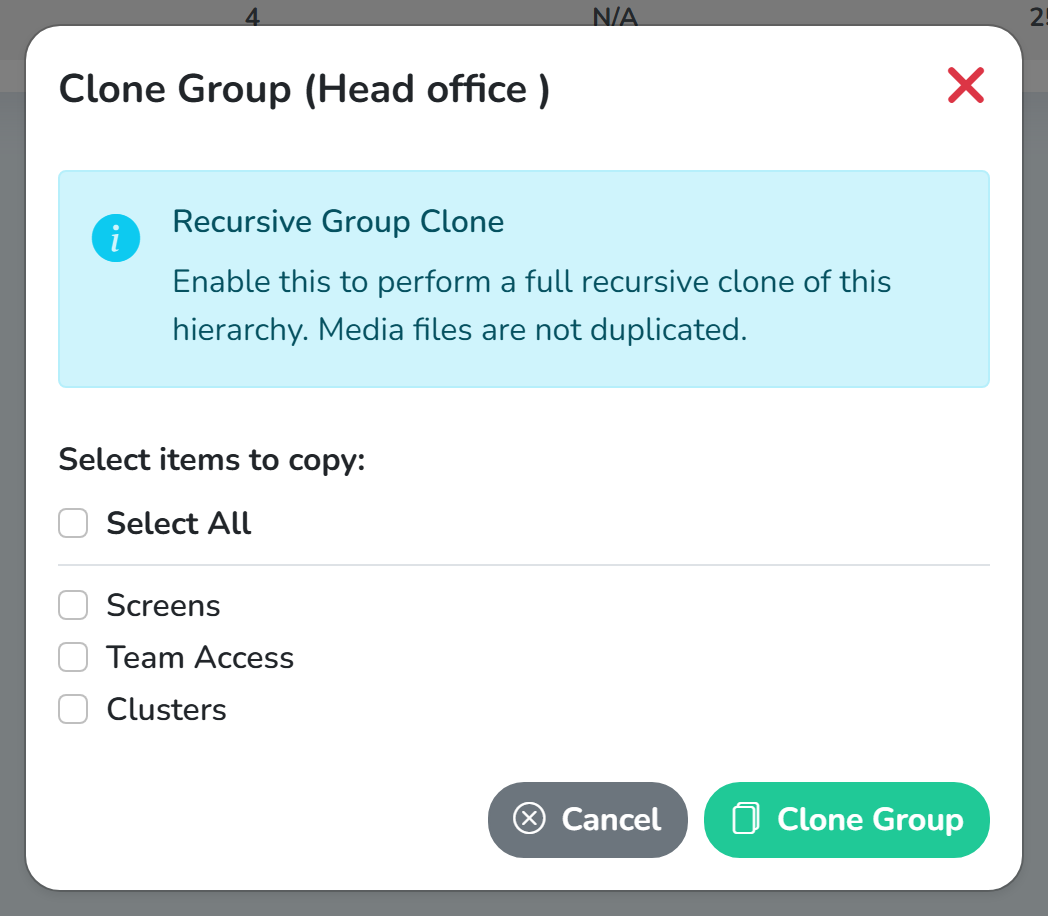 Makes the copyWhat the copy takes along
The blue note at the top of the window is about Recursive Group Clone: it copies the group with its whole hierarchy of subgroups, while the media files stay as single copies.
The copy joins the Screen Groups list.
Delete a group
Deleting a group permanently deletes it along with all its subgroups and screens.
Step 1: Click the red 🗑️ Delete button next to the group you want to remove.
Step 2: Choose what happens to the group’s files, then click Delete Group to confirm.
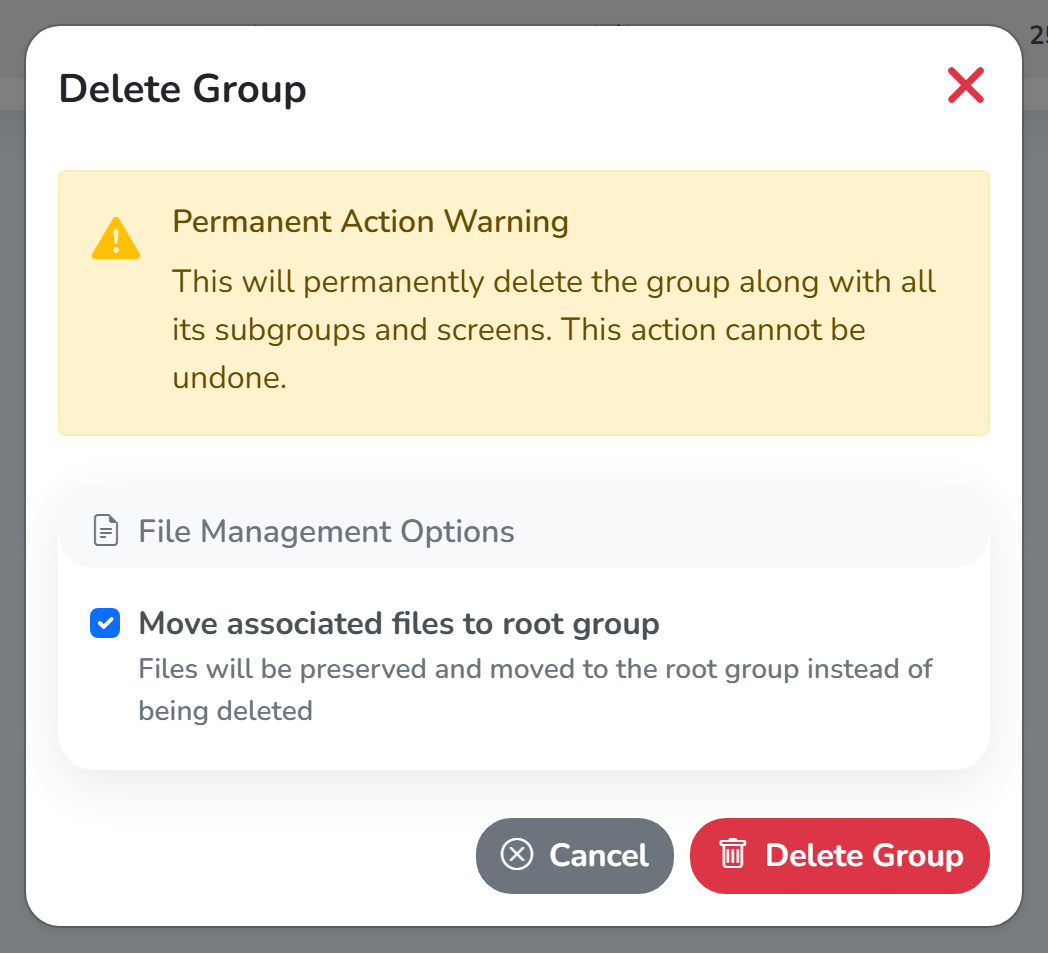 Can be disabledLeaves the group as it isConfirms the deletion
Move associated files to root group keeps the group’s files and moves them to the root group.
The group leaves the Screen Groups list.
Assign media to a group
Step 1: On the group settings page, open the level that holds the screens, and click Bulk Actions.
Step 2: Select Publish Media, choose the files, and publish them to every selected screen.